
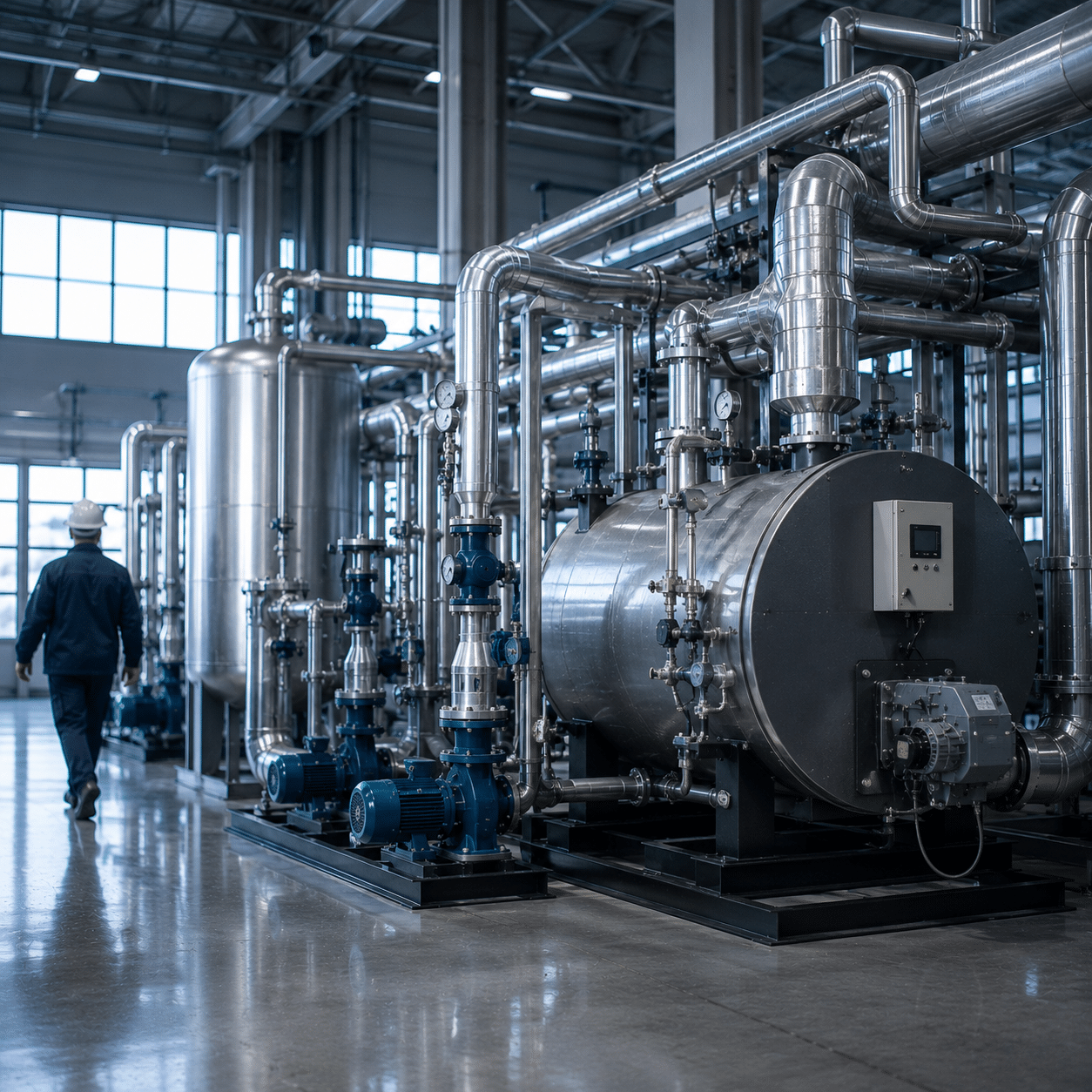
Thermal oil systems typically consist of a primary system and one or more secondary systems. The primary system includes a boiler, pump(s), piping, a storage tank, an expansion tank, and, if necessary, a heat exchanger; it is configured as a circuit and equipped with the necessary pressure and temperature safety devices. The boiler heats the thermal oil, after which the pump circulates it through the primary circuit.
Thermal oil systems can be equipped with so-called economizers: units in the boiler’s flue gas system that can improve efficiency by a few percent. In the secondary circuits—the parts of the system connected to the end users, such as a reactor vessel or drying tunnel—controlled valves release the required heat. The cooled oil is then pumped back to the primary circuit to be reheated.
The capacity of the boiler depends on the size of the secondary circuits and the heat demand per circuit. All circuits in thermal oil systems are protected against overpressure and excessive or insufficient temperatures, and the flow is constantly monitored. If the pump fails, the boiler automatically shuts down to prevent overheating or combustion of the thermal oil.
Most thermal oil systems up to 350°C are virtually pressureless and operate in the liquid phase. At temperatures above 350°C, the pressure can rise to as high as 10 bar, and systems operating around 400°C
can, depending on the customer’s preferences, also operate in the gas phase of the thermal fluid.
When designing a thermal oil system, the right balance between boiler capacity,
circuit layout, and safety features is essential for a long service life and safe operation. Rodun International advises and guides you through the design, construction, and maintenance of your thermal
oil system, drawing on more than twenty years of industry experience. Would you like to know which system configuration best suits your process and temperature range? Feel free to contact us for
personalized advice.
A comprehensive and growing product portfolio